Letter of Wishes in Australia: What It Is and How to Write One
General information, not legal advice.
On this page
- TL;DR
- What a letter of wishes is
- Is a letter of wishes legally binding?
- What a will does that a letter cannot
- What you can put in a letter of wishes
- A letter of wishes for parents
- How to write your letter of wishes
- Where to keep it and who should know
- When to review or update it
- The risks of relying on a letter alone
- Start with the will
- FAQ
- Sources
- Recommended

Quick answer
A letter of wishes is a private note you leave for your executor or trustee, alongside your will. It explains your preferences and your reasons. It is not legally binding, and it cannot change what your signed will says. In Australia it works best as a companion to a valid will, never as a replacement for one.
This guide explains what a letter of wishes can cover, where it falls short, and how parents in particular can use one. It is general information only, not legal advice.
TL;DR
- A letter of wishes is an informal, non-binding document that guides your executor or trustee. Your will is the document that counts.
- If the letter conflicts with a valid will, the will generally wins.
- Good topics include funeral preferences, pets, personal items, messages to loved ones and how you want children cared for.
- Keep it separate from your will, store it where your executor can find it, and review it when life changes.
- Get a lawyer's help if you have a blended family, a business or trust, assets overseas, or a likely contest.
What a letter of wishes is
A letter of wishes is a guide. It holds your wishes and requests, such as advice on managing your affairs, personal messages, or preferences about future care of pets or minors. Unlike a will, it is not legally binding.
Think of your will as the legal instrument. It says who gets what, who is the executor, and who you appoint as guardian of your children. The letter is the human layer on top. It says how you hope those decisions will feel in practice.
You may also see it called a memorandum of wishes or a statement of wishes. The names overlap. What matters is the job it does: it helps the people carrying out your will understand what you would have wanted.
Is a letter of wishes legally binding?
No. A letter of wishes is not legally binding. If it conflicts with a valid will, the formal will generally takes precedence. The letter only explains or gives context to the executor or trustee.
That is the key point for anyone relying on one. If you write "I'd like my sister to have my jewellery" in a letter, but your will leaves everything to your partner, the will governs. Your partner may choose to honour the letter. They are not required to.
When an informal document can be treated as a will
There is a twist. In New South Wales, the Supreme Court may admit an informal document as a will if it is satisfied the person intended it to operate that way. This is discussed by a Sydney firm in the context of letters of wishes.
This cuts both ways. A letter written loosely could be argued to be a testamentary document. That can create confusion or a dispute. A Queensland accredited specialist in succession law has stressed that practitioners need great care and skill when drafting letters of wishes so they cannot be misread as binding testamentary documents.
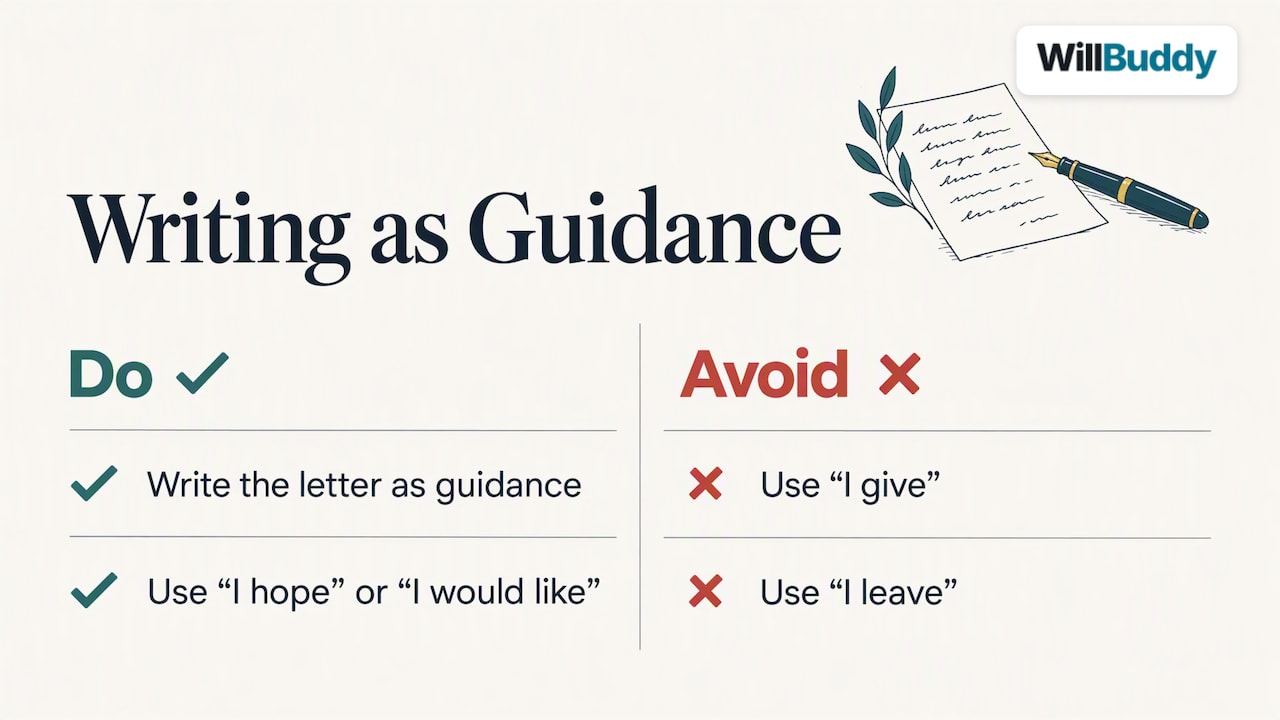
In plain terms: write your letter as guidance, not as orders. Use words like "I hope", "I would like" and "I would be happy if". Avoid phrases such as "I give" or "I leave", which belong in a will.
Rules on informal documents differ between states and territories. If this matters to you, check your own state's rules or speak to a lawyer.
What a will does that a letter cannot
A will must meet formal requirements. In general, that means it is in writing, signed by you, and signed by witnesses who watch you sign. The details differ by state. Our guide to who can witness a will in Australia covers the rules state by state. If a will misses these steps, it can fail. See why a will can be invalid in Australia for common causes.
A letter of wishes usually skips those formalities. That is why it can be rewritten without signing a new will. It is easy to update. It is also why it has no legal force.
Here is how the two compare:
| Will | Letter of wishes | |
|---|---|---|
| Legally binding | Yes, if validly made | No |
| Signed and witnessed | Yes, state rules apply | Usually not required |
| Names executor and guardian | Yes | No, it can only express views |
| Distributes your estate | Yes | No |
| Easy to change | Needs formal steps | Can be rewritten freely |
| Private after death | Often becomes part of probate | Can stay private |
The last row is general practice, not a rule. A letter can be pulled into a dispute if someone challenges the estate.
What you can put in a letter of wishes
The letter is for things that are too personal, too detailed or too changeable for a will. Common topics are below.
Funeral and farewell preferences
Many people write their funeral wishes in a will. The trouble is timing. The NSW Government notes that a will is often not seen or read until after the funeral, so it suggests sharing funeral wishes separately with family and friends.
A letter of wishes is one way to do that. You can note burial or cremation, music, readings, flowers, who you would like to speak, and where you would like your ashes. Our article on funeral wishes in an Australian will explains how to word them and what the cremation rules mean. Funeral wishes are generally treated as guidance, so the letter is a sensible place to add the detail.
It also helps to tell your family how the funeral might be paid for. Our guides on paying for a funeral from the estate and estate bank accounts before probate explain the practical side.
Pets
A pet cannot inherit under Australian law, so the will usually names a person to take on the animal. The letter can fill in the daily detail: the vet's name, the diet, the daily routine, the medication, and the person you would prefer. It gives your executor something practical to act on.
Personal items and keepsakes
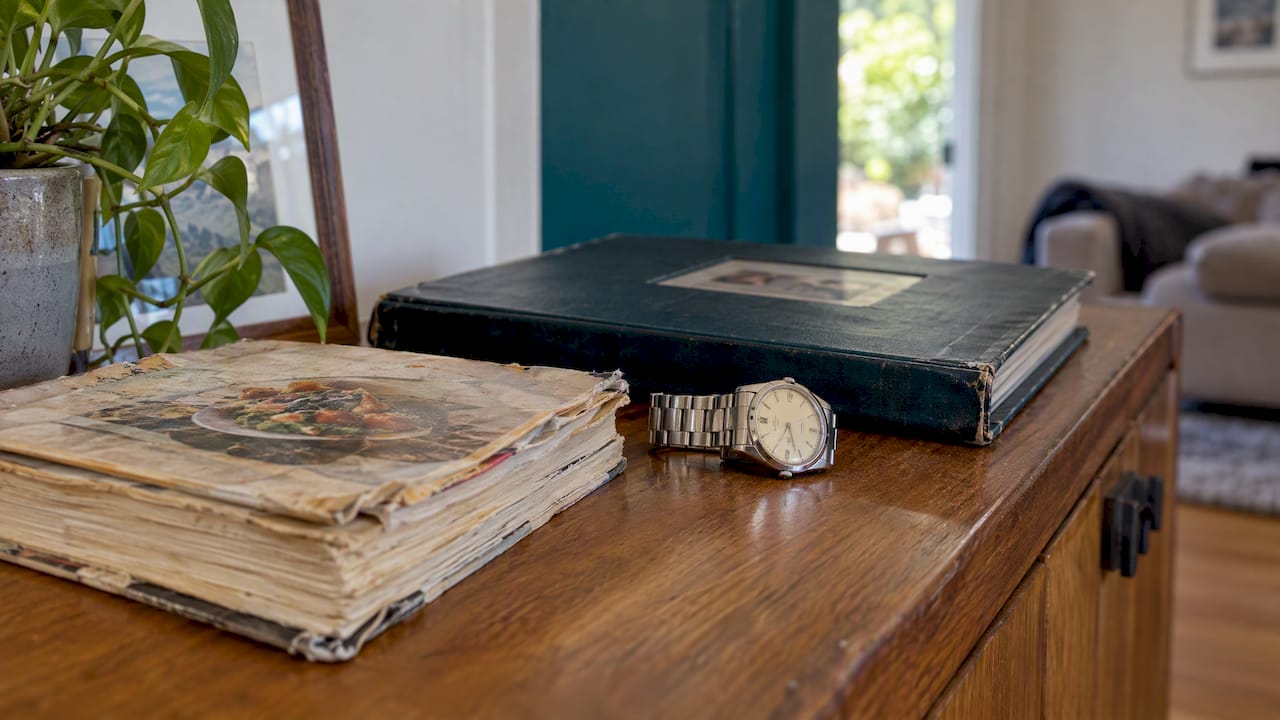
A will can leave general items to a person or group. Small things often cause the biggest rows: a watch, a recipe book, a photo album. The letter can say who you hope gets what, and why. A note such as "Mum's ring has meaning for you because..." often keeps the peace better than a list.
If an item is valuable or likely to be contested, put it in the will itself, not just the letter.
Guidance for your executor
Your executor has a lot to do. The letter can list where documents are kept, which accounts exist, who to call, and how you would like certain things handled. It can also explain your choices. If you are still deciding who should act, read our guide on how to choose a will executor in Australia. If you are considering more than one, see multiple executors in a will.
Personal messages
Some people use the letter to say what they never quite said. That might be thanks, forgiveness or encouragement for a child's future. This part has no legal role. For many families it is the most valued part.
A letter of wishes for parents
If you have children under 18, the will is where you name a guardian. That appointment is the legal step. A letter of wishes can then add the context, so the guardian and your executor know how you hope your children will be raised.
This is guidance only. A letter cannot appoint a guardian, and it cannot bind a guardian to follow it. It can, however, give a caring adult a clear picture of your family.
Things parents often include:
- Routines and health. School, doctors, allergies, medication, activities and bedtime habits.
- Values and upbringing. Faith or cultural traditions, language, and the kind of education you hope for.
- Family connection. Which grandparents, aunts, uncles and friends you want your children to keep in touch with.
- Money for the children. How you hope funds are used, for example for school, university or a first car. Note that the legal structure for this belongs in the will, and complex arrangements such as a trust need a lawyer.
- Why you chose your guardian. A short, kind explanation can reduce hurt among relatives who were not chosen.
- Messages for each child. Words they can read at different ages.
Keep the tone loving and practical. Do not use the letter to criticise relatives. Harsh comments can inflame a dispute later.
If your family situation is complex, such as a blended family, speak to a lawyer. A simple rule: a letter of wishes should support a clear will, never fill gaps in a weak one.
How to write your letter of wishes
You do not need legal language. Plain, warm writing works best.
- Make your will first. The letter refers to the will, so the will should be in place. Sign it with proper witnesses.
- List what you want to cover. Funeral, children, pets, items, messages, executor notes. Add or drop topics to suit you.
- Write in guidance language. Say "I would like" and "I hope". Avoid wording that sounds like a gift or a command.
- Be specific where it helps. Names, places and routines are more useful than broad statements.
- Explain your reasons. A reason makes a request easier to follow, and easier to accept.
- Match it to your will. Read both side by side. Nothing in the letter should contradict the will.
- Date it. A date shows which version is the latest.
- Think about signing. A signature is usually not required. Some people still sign and date it to show it is genuine. Ask a lawyer if you are unsure how it might be read.
A short example of tone
This is a sample of wording only, not a template to rely on:
"To my executor: I would like my funeral to be simple. I hope there is music from my playlist titled 'Sundays'. Our dog, Biscuit, has a vet at the local clinic and eats twice a day. I hope Sam can give him a home, but I understand if that is not possible."
Notice the soft wording and the practical detail. It gives direction without sounding like a legal instruction.
Where to keep it and who should know
Store the letter where your executor can find it quickly. A letter nobody can find helps nobody.
- Tell your executor the letter exists and where it is.
- Keep it with your will or other key papers, but as a separate document.
- Keep a copy in a secure digital place if you can.
- Share funeral wishes with family now, not later, because the will may not be read in time.
Do not attach the letter to the will as though it were part of it. Keeping them separate helps avoid any argument that the letter is a testamentary document.
When to review or update it
The letter is easy to change, so use that. Review it when:
- you have a child, or a child turns 18
- you marry, separate or divorce
- you move state or buy or sell major assets
- your executor or guardian choice changes
- a pet dies or you get a new one
- someone you named passes away
A review also checks the will. Wills can be affected by life events, and your letter should always match the current version. Our estate planning checklist is a handy prompt for what to revisit and how often.
The risks of relying on a letter alone
A letter of wishes can do a lot, but only in the right place. Keep these points in mind.
- It cannot override your will. If the two conflict, the will generally wins.
- It may be ignored. Your executor or trustee can listen to your wishes but is not forced to follow them.
- It could be argued to be a will. An informal document can sometimes be treated as a will by a court, as in NSW. Careless wording can cause confusion.
- It may be seen in a dispute. If someone contests the estate, the letter may come into the picture. Write nothing you would not want read aloud.
- State rules differ. What works in one state may be handled differently in another.
Some situations call for a lawyer, not a DIY letter. These include blended families, a business or trust, assets overseas, or a likely contest of your will. In those cases the letter should be drafted with legal advice so it supports your plan and does not undercut it.
Start with the will
A letter of wishes only works if the will beneath it is sound. Your will names the executor, appoints your children's guardian and sets out who gets what. Without a valid will, the rules of your state decide, and your letter has nothing to attach to.
WillBuddy is built for that first step. You answer plain questions one at a time, and it drafts a will for your state or territory. You can read every word for free before you pay, then print it and sign it with witnesses. For current plan details, see Annual Access pricing. You can also see how the online will tool works.

Once your will is done, write your letter of wishes while the details are fresh. Then store both where your executor can find them.
FAQ
Is a letter of wishes the same as a will?
No. A will is a formal legal document that appoints executors and guardians and distributes your estate. A letter of wishes is informal guidance that sits alongside it. It is not legally binding, so it cannot do the job of a will.
Does a letter of wishes need to be signed and witnessed?
Usually not, which is why it can be rewritten without the formalities of a new will. Some people sign and date it anyway. Your will, by contrast, must follow your state's signing and witnessing rules.
Can I use a letter of wishes to appoint a guardian for my children?
No. The appointment belongs in your will. The letter can explain your hopes for how your children are raised and why you chose your guardian. It guides that person, but it does not bind them.
Where should I put my funeral wishes?
You can include them in your will, but a will is often not read until after the funeral. Share them with family and friends separately, and put the detail in a letter of wishes your executor can reach quickly.
When should I lean on a lawyer?
Talk to a lawyer if you have a blended family, a business or trust, assets overseas, or expect your will could be contested. A lawyer can make sure your letter and will work together.
Sources
Show the 4 sources
- Is a Letter of Wishes Legally Binding in NSW?
- Funeral wishes, NSW Government
- Succession and a Letter of Wishes: Why they are a must
- Successful succession: Estate planning, letters of wishes (Informit)
This article is general information only and not legal advice. Wills law differs by state and territory, so check the succession legislation that applies where you live or speak to a lawyer.
Start your will free at willbuddy.com.au and read it before you pay.
Recommended
For the one who gets things sorted
Now write yours, with your family's names in it
Plain questions about your family, one at a time, and WillBuddy drafts a will for your state. Until you sign one, the law in your state or territory decides who gets what. Read every word free, with no card. You pay only if you want to print it.
Start my will freeLast updated 31 October 2026.
This article is general information only and is not legal advice. It is our best interpretation of the law as at 31 October 2026. WillBuddy is not a law firm, and it never replaces advice from a lawyer or solicitor. Laws change and differ between states and territories, so for your own circumstances, please get legal advice.