Funeral Wishes in an Australian Will: Cremation Rules and Wording
General information, not legal advice.
On this page
- What the law says about funeral wishes in a will
- The executor's role and when courts may intervene
- How to record funeral wishes so they're easy to follow
- Practical steps that improve the chance your wishes are followed
- Sample wording you can adapt
- How funeral costs are paid and what executors should know
- Recording your funeral wishes with WillBuddy
- FAQ
- Sources
- Recommended
Quick answer
Short answer: funeral wishes in a will are generally not legally binding, with limited exceptions. Tell your executor what you want now, and leave a clear letter of wishes with details they can act on fast. The person with the right to dispose of your body usually decides what happens, and your will is often read only after the funeral.
In short
- A signed, specific cremation direction may bind a personal representative in some states; in Queensland, they must seek permission and follow it once granted.
- Executors should try to honour requests, but limited funds or impractical instructions can override them; choose someone informed and brief them directly.
- Because a will is often read after the funeral, tell your executor and next of kin where your letter of wishes is kept.
- Funeral costs can usually be paid or repaid from the estate, but if funds are limited your executor may have to arrange a simpler funeral than you asked for.
What the law says about funeral wishes in a will
The common-law starting point across Australia is simple: whoever holds the right of disposal, usually your executor or the administrator of your estate, decides how your body is handled. Funeral instructions you write into your will are treated as requests, not orders, under this general rule set out by the Victorian Law Reform Commission.
There are narrow exceptions. In some states, a signed, specific direction about cremation carries legal weight that ordinary funeral wishes don't. Section 7 of Queensland's Cremations Act 2003 requires a personal representative who knows of a signed cremation instruction to apply for permission and follow it once granted.
- The general rule: the person with right of disposal decides, not the will.
- The exception: a formal written cremation direction can bind the executor in some states.
- The catch: rules differ by state, so check the legislation that applies to you.
A written, signed direction about cremation is one of the few funeral instructions some Australian states treat as enforceable, rather than advisory, according to the Victorian Law Reform Commission.
The executor's role and when courts may intervene
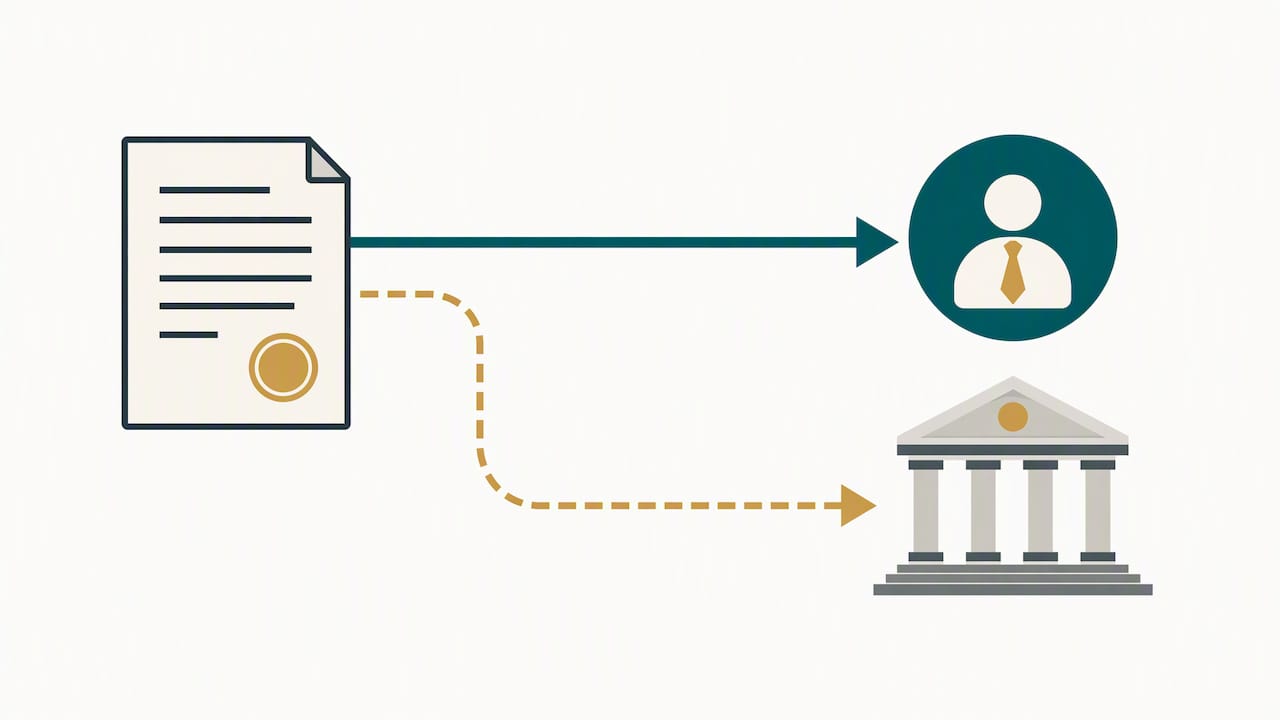
Your executor, or whoever is granted administration of your estate, holds what's called the right of disposal. This gives them the practical and legal authority to arrange burial or cremation, even where it differs from what you wrote in your will, subject to the cremation rules some states set. Legal Aid NSW confirms executors should try to follow your wishes but aren't bound to if funds are tight or the request is impractical.
Courts step in when there's genuine conflict: family members disagree about disposal, there's doubt about which wishes are most recent, or an instruction simply can't be carried out. These disputes are costly and slow, and they delay the funeral itself.
- Choose an executor who knows your wishes and is willing to act on them.
- Brief them directly rather than relying only on the will.
- Give them a backup contact in case they can't act quickly.
Pro Tip: Talk to your executor before you finalise your will, not after, so there are no surprises when it matters most.
How to record funeral wishes so they're easy to follow
Keep the instruction in your will short and unambiguous: state burial or cremation, and nothing more complicated. Save programme-level detail for a separate letter of wishes, which you can update without redoing your whole will.
- Write one clear line in your will stating your core preference, burial or cremation.
- Attach or reference a letter of wishes for music, readings, service style, or dietary notes for the wake.
- If you do not want to be cremated, say so in writing and sign it. In some states, including NSW, a body must not be cremated if the person left a written direction against it, as Legal Aid NSW explains. Check your own state's rule.
A letter of wishes can cover things a will shouldn't try to:
- Pallbearer preferences or specific songs and readings.
- Dietary needs for guests, such as a vegetarian or vegan catering request.
- Whether you want a religious, secular, or private family-only service.
Our guide on making a will covers the signing and witnessing steps for the will itself. A letter of wishes is a guide for your executor and does not need witnesses.
Practical steps that improve the chance your wishes are followed
Legal wording only goes so far. What actually gets your wishes carried out is preparation.
- Tell your executor and next of kin where your will and letter of wishes are kept.
- Consider a prepaid funeral contract or funeral bond, and keep a copy with your other documents.
- Give your executor the bank or insurance details they'll need to access funds without delay.
- Review and update these documents whenever your preferences change, not just when you update your will.
A letter of wishes is worth more here than extra detail crammed into the will itself, because NSW Government guidance notes a will is often found and read only after the funeral has already happened.
Sample wording you can adapt
Keep clauses short. Specific, simple language is easier for an executor to act on than a long explanation.
- Burial: "I wish to be buried, and I ask my executor to arrange this where practicable."
- Cremation: "I wish to be cremated. This is my signed direction regarding cremation."
- Simple service: "I would like a simple, low-cost service without extensive floral arrangements."
- Music and readings: "Details of readings and music I would like are set out in my letter of wishes."
- Private funeral: "I would prefer a private, family-only funeral, with no public notice beforehand."
Adjust this wording to match your state's rules, especially for cremation directions, and speak with a lawyer if your situation involves a contest, a trust, or assets overseas.
How funeral costs are paid and what executors should know
Funeral costs can be paid from the assets of your estate, often from your bank account, as the NSW Government explains. If a family member pays first, they can usually seek repayment from the estate when there is enough money in it. Debts and expenses are generally settled before beneficiaries receive their gifts.
- If you've prepaid your funeral, keep the contract with your will so your executor can locate and use it straight away.
- If estate funds are limited, your executor may not be able to pay for everything you asked for, and can make the arrangements they consider appropriate.
- Communicate realistically with your executor about what the estate can afford.
The person who arranges and pays for the funeral can usually recover the cost from the estate, according to Legal Aid NSW, so a funeral paid up front by family is not usually a cost they carry for good.
More detail on how this fits into the broader estate process is in our after-death process guide.
Recording your funeral wishes with WillBuddy
We built WillBuddy so you can record your funeral wishes inside a will drafted for your own state or territory. You answer plain questions one at a time, and the platform drafts the document for you.

- You can name your executor, record your funeral wishes, and set out guardians or gifts in the same session.
- You can read every word of your will free before you pay anything.
- Your will is stored securely, encrypted and in Australia, while your plan is active.
| What you get | How it works |
|---|---|
| State-specific draft | Answer plain questions, get a will matched to your state or territory |
| Free review | Read every word before you pay |
| Document storage | Encrypted storage in Australia while your plan is active; print a copy and tell your executor where it is |
For blended families, a business or trust, assets overseas, or a situation likely to be contested, speak with a lawyer rather than relying on a standard template. For everyone else, our pricing page sets out the Annual Access plan, $39 a year, for ongoing edits and storage.
Start your will free at Willbuddy and read it before you pay.
This article is general information, not a substitute for advice from a qualified lawyer. Consult a qualified legal professional about your own circumstances before acting on anything here.
FAQ
How do I write a basic will in Australia?
A basic will names an executor, sets out how your assets are distributed, and is signed in front of two witnesses, with the exact formalities varying by state. Our guide to making a will without a lawyer walks through these steps, and WillBuddy drafts a state-specific will by asking plain questions one at a time.
Can you provide some examples of funeral wishes?
Common examples include a simple statement of burial or cremation preference, a request for a private or public service, and notes on music or readings kept in a separate letter of wishes. Keep the will's wording short, and put detailed preferences in the accompanying letter.
Sources
Show the 4 sources
Recommended
For the one who gets things sorted
Now write yours, with your family's names in it
Plain questions about your family, one at a time, and WillBuddy drafts a will for your state. Until you sign one, the law in your state or territory decides who gets what. Read every word free, with no card. You pay only if you want to print it.
Start my will freeLast updated 10 October 2026.
This article is general information only and is not legal advice. It is our best interpretation of the law as at 10 October 2026. WillBuddy is not a law firm, and it never replaces advice from a lawyer or solicitor. Laws change and differ between states and territories, so for your own circumstances, please get legal advice.