Per Stirpes vs Per Capita: How Your Estate Passes Down
General information, not legal advice.
On this page
- TL;DR
- What the two terms mean
- A worked example with one child gone
- Why the wording matters in Australia
- What happens if you have no will
- What if a beneficiary dies shortly before you
- Which approach suits your family
- Questions to ask yourself before you draft
- Plain wording to aim for
- Making your will with WillBuddy
- Common mistakes to avoid
- FAQ
- Sources
- Recommended

Quick answer
Per stirpes and per capita are two ways to split an estate among descendants. Under per stirpes, a child's share follows their family branch. If that child dies before you, their children split it. Under per capita, everyone in the named group takes an equal share, whatever branch they come from. In Australia, the result can depend on the exact words in your will and on your state or territory. This guide explains both terms with worked examples. It also covers what the courts say and how to think about it before you sign.
This is general information only, not legal advice.
TL;DR
- Per stirpes means "by the branch". A child who dies before you is replaced by their own children, who share that one share.
- Per capita means "by the head". Everyone in the group takes an equal share, so grandchildren can end up with the same amount as your surviving children.
- Australian courts have long treated a gift to a class of children as per capita unless the will shows otherwise. Clear wording matters.
- When there is no will, the law sets the rule. Several Australian law reform bodies describe it as per stirpes.
- Blended families, a business or trust, assets overseas or a likely contest are all good reasons to see a lawyer.
What the two terms mean
Both are Latin. They describe how a share is divided when more than one generation could take.
Per stirpes means "by the stocks" or branches. Picture your family as a tree. Each child is the start of a branch. If a child dies before you, that branch does not vanish. Their share passes to their children, and the grandchildren split it between them.
Per capita means "by the head". The estate or the gift is counted head by head. Each person who qualifies gets the same size share, and it does not matter whose child they are.
In older laws and cases you may see the English phrase "according to their stocks". It means the same as per stirpes, and it is used in contrast to per capita.
A worked example with one child gone
Say you have two children, Sam and Alex. You leave your estate to your children in equal shares. Sam has died before you and left three children. Alex is alive.
Per stirpes:
- Alex takes one-half.
- Sam's half passes down Sam's branch.
- Sam's three children split that half equally. Each gets one-sixth.
So where one child dies leaving three children, each grandchild receives one-sixth and the surviving child keeps one-half.
Per capita (counting everyone in the group):
Now suppose the gift is worded so that the group is Alex and Sam's three children, and each takes an equal share. That is four people. Each gets one-quarter.
Alex's share drops from one-half to one-quarter. Each grandchild's share rises from one-sixth to one-quarter. Same family, same estate, very different result.
| Alex (surviving child) | Each of Sam's 3 children | |
|---|---|---|
| Per stirpes | One-half | One-sixth |
| Per capita (all four equal) | One-quarter | One-quarter |
Neither answer is right for everyone. It depends on what you want. The risk is not choosing at all and leaving the wording to chance.
Why the wording matters in Australia
A common misunderstanding is that "equal shares to my children" automatically follows the branches. It does not always work that way.
Courts start from per capita for class gifts
The High Court of Australia has said that a gift to the children of several named people, in equal shares, is read as a class gift. In King v Perpetual Trustee Co (Ltd), the Court confirmed the settled rule that, without enough sign of a different intention, the class members take per capita. The language was about dividing residue into equal shares among all the children of all the named relatives as one group.
In plain terms, a gift "equally among the children of A and B" usually means each child takes the same share, not half for each family.
So if you want a branch-by-branch split, say so. Do not assume the court will read it that way.
The testator's intention comes from the words
Courts look for your intention first in the words of your will. Other evidence of what you meant is allowed only in limited cases, for example in New South Wales where the words are meaningless or ambiguous (Succession Act 2006 (NSW) s 32). That is why vague phrases cause trouble. A court cannot ask you what you meant after you have died.
A real example of wording going per capita
In Application of Marais, a will left a gift to "my remaining relatives". The NSW Supreme Court read that as the relatives who would take if there were no will, and held that the gift should be distributed per capita among them, each taking an equal share. Today's NSW rules for an estate with no will follow the branches instead. The same family could therefore get different splits depending on whether there was a will and how it was worded.
What happens if you have no will
When someone dies without a valid will, state and territory law sets who gets what. The rules differ between jurisdictions, and our guide to dying without a will in Australia covers the order of entitlement.
On the question of branches, the law and the law reform bodies point the same way:
- New South Wales: Since 1 March 2010 the intestacy rules are in Chapter 4 of the Succession Act 2006. Under s 127, if a child of the deceased died first leaving children, those grandchildren take their parent's share between them.
- Victoria: The Victorian Law Reform Commission explains that if a child of the deceased would have taken a share but died first leaving children, those grandchildren take their parent's share. They share it equally between them. They do not become equal recipients with the deceased person's surviving children. The Commission recommended abolishing per capita distribution on intestacy and applying per stirpes in all cases (Recommendation 34). Victoria's intestacy rules were rewritten for deaths from 1 November 2017, and descendants of a child who died first now take that child's share.
- National consistency: The NSW Law Reform Commission's Report 116, prepared for the national uniform succession laws project, dealt with per stirpes distribution on intestacy. Its recommendations have largely been adopted in New South Wales and Tasmania.
That tells you something useful. Per stirpes is the default thinking behind intestacy law. If you do nothing, the law may follow branches anyway. But it will also follow its own order of relatives, which may not be what you want. A will lets you decide.
What if a beneficiary dies shortly before you
Sometimes a gift fails because the person named dies before you. Some jurisdictions have rules that step in for gifts to your own children or other descendants. In the Northern Territory, if a gift is to one of your descendants who does not survive you by 30 days, the Wills Act 2000 (NT) s 41 can pass it to that person's own descendants who survive you. New South Wales has a similar rule in s 41 of the Succession Act 2006. These rules apply unless your will shows a different intention, and they have their own conditions.
In plain terms, a state or territory rule can work alongside your wording, or fill a gap your wording leaves. This is a good reason to name your state or territory when you plan, and to say clearly in your will what should happen if someone does not survive you.
We do not set out every jurisdiction's survival and substitution rules here. They differ, and they can change. If your gift to a child or grandchild turns on this point, check the current legislation for your state or territory, or ask a lawyer.
Which approach suits your family
There is no single right choice. Think through these situations.
You want each branch treated alike
If you have three children and one has two kids while another has five, per stirpes keeps each branch's share the same size if a child dies first. The grandchildren in the big family each get a smaller slice than the grandchildren in the small family, because the same share is split more ways. That may feel fair to you. Or it may not.
You want every grandchild to get the same
If your main wish is equal treatment of all grandchildren, a per capita style gift to the grandchildren as a group does that. You can also name them or say "equal shares among all my grandchildren who survive me". Be specific about who counts and when.
One child is estranged or already provided for
You can leave a child out of your will, but a family member who is left out may be able to challenge it. That is a likely-contest situation, and a lawyer is the right person to see. Do not rely on a per stirpes or per capita label to manage that risk.
You have minor children
If your children are young, the bigger questions are who will care for them and who will manage money held for them. Our guide on minor children, guardians and trusts in wills walks through these. Grandchildren are usually a later concern, but a good will can still say what happens if a child dies before you.
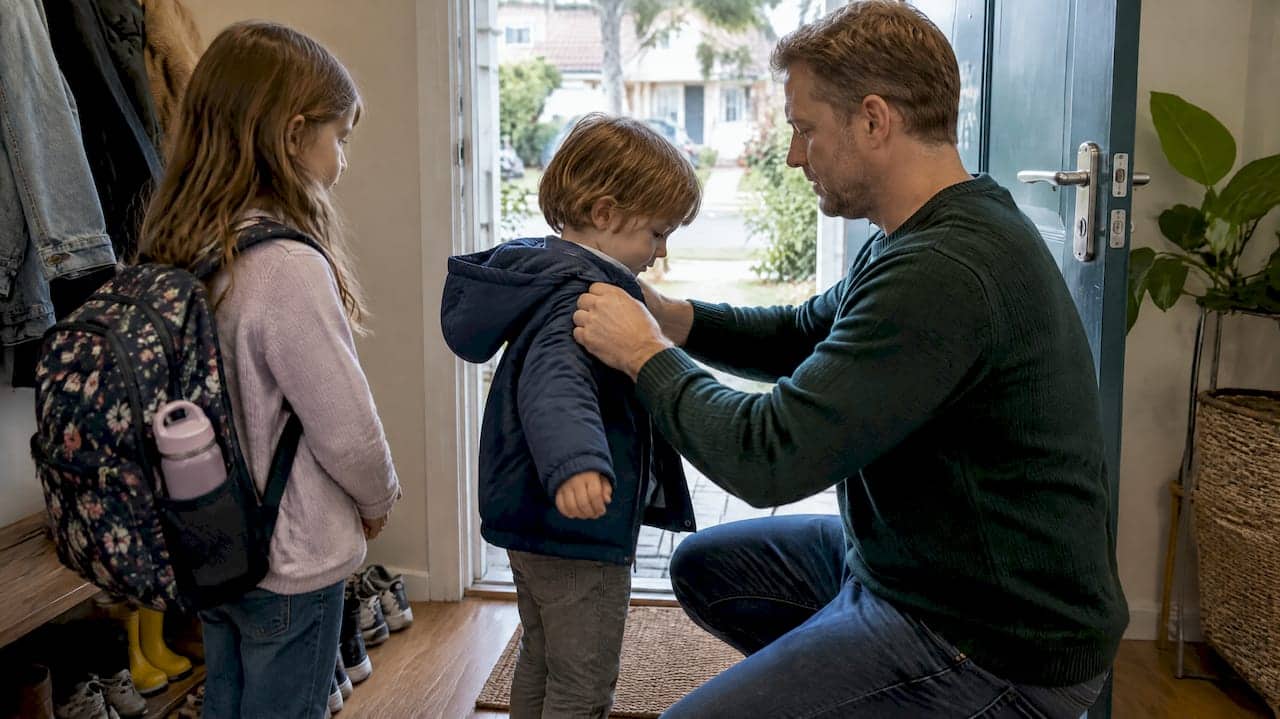
You have a blended family
Stepchildren, children from earlier relationships and second partners make the maths harder. Branch and head counts can produce results you did not expect. A lawyer should look at this kind of family before you sign.
Questions to ask yourself before you draft
Write down answers to these first. They make the drafting easier.
- Who do I want to benefit: only my children, or my grandchildren too?
- If one of my children dies before me, should their share go to their children, or be split among my other children?
- If a child has no children and dies before me, who should take that share?
- Do I want every grandchild to get the same, or every branch to get the same?
- What should happen if someone dies shortly after me?
- Do I have gifts of particular items or amounts that sit outside the main split? Our piece on wording fixes for specific gifts shows why exact wording matters there too.
A clear answer to question 2 is the heart of the per stirpes versus per capita choice.
Plain wording to aim for
You do not need Latin in your will. Plain words that say what happens to each share are safer than a label you only half understand.
Some ideas for how to think about your own wording:
- Say who the first-level beneficiaries are, such as "my children".
- Say what happens if one of them does not survive you.
- Say whether their children take that share between them, or whether it goes to the others.
- Say how long someone must survive you to take a gift, if you have a view.
Then read the result back as if you were a stranger. Could a different reader take it another way? If so, rewrite it. The cases above show how courts have had to decide meaning after the event because the words left room.
Making your will with WillBuddy
WillBuddy is an online platform for drafting a will for your Australian state or territory. You answer plain questions one at a time. They cover your guardians for children, your executors, how your estate is divided and gifts you want to leave. You can read every word of your will free before you pay. Then you print it and sign it with witnesses.
Life changes, and so does a family. An annual subscription lets you store your will securely in Australia and make up to 50 AI-assisted edits a year. That helps when a child is born, a grandchild arrives or someone passes away. You can see the current plan on the WillBuddy pricing page, or start from the WillBuddy home page.
WillBuddy gives general information and does not replace a lawyer. For blended families, a business or trust, assets overseas or a likely contest, see a lawyer.
Common mistakes to avoid
- Assuming "equal shares to my children" covers grandchildren. It may not. Say what happens if a child dies first.
- Using terms you cannot explain. If you cannot say in one sentence what the term means for your family, use plain words.
- Leaving the will unchanged for years. A new grandchild or a death in the family can make old wording out of date.
- Forgetting that the rules vary by state and territory. Law reform reports show the rules have been worked on across jurisdictions, but the current law in your place is what counts.
- Skipping the signing steps. A will must be signed and witnessed the way your state or territory requires. Check the rules where you live.
After a death, the executor's work also depends on how clear the will is. Our after death process guide covers what happens next.
FAQ
What is the difference between per stirpes and per capita?
Per stirpes passes a deceased beneficiary's share down their own branch, so their children split it. Per capita divides a gift equally among everyone in the named group, whichever branch they belong to. Your grandchildren can get quite different amounts under each.
Does Australia use per stirpes or per capita?
Both appear. Law reform bodies describe intestacy distribution to descendants as per stirpes. For gifts in a will, Australian courts start from per capita when a gift is to a class of children as a group, unless the will shows a different intention. Check your own state or territory's law.
If my child dies before me, do their children get their share?
It depends on your will's wording and the law where you live. Some jurisdictions have rules that can pass a gift to the deceased beneficiary's children, such as the Northern Territory's 30-day survival provision. Safer still is to say in your will what should happen. A lawyer can advise on tricky cases.
Do I need to use the words per stirpes in my will?
No. Plain words that say who takes each share, and what happens if someone dies first, are enough. The key is that the wording leaves no room for a different reading. Clear instructions are easier for your executor to follow.
Does a spouse automatically inherit everything in Australia?
Not always. When there is no will, the share depends on your state or territory and on who survives you, such as a partner and children. Our guide to dying without a will sets out the state-by-state picture.
Sources
Show the 5 sources
- King v Perpetual Trustee Co (Ltd) [1955] HCA 70; (1955) 94 CLR 70
- Application of Marais [2009] NSWSC 206
- NSW Law Reform Commission, Report 116: Uniform succession laws: intestacy
- Victorian Law Reform Commission, Succession Laws Report, Chapter 5: Intestacy
- Wills Act 2000 (NT)
Start your will free at willbuddy.com.au and read it before you pay.
Recommended
For the one who gets things sorted
Now write yours, with your family's names in it
Plain questions about your family, one at a time, and WillBuddy drafts a will for your state. Until you sign one, the law in your state or territory decides who gets what. Read every word free, with no card. You pay only if you want to print it.
Start my will freeLast updated 4 November 2026.
This article is general information only and is not legal advice. It is our best interpretation of the law as at 4 November 2026. WillBuddy is not a law firm, and it never replaces advice from a lawyer or solicitor. Laws change and differ between states and territories, so for your own circumstances, please get legal advice.