Secure Will Storage in Australia: Where to Keep Your Original
General information, not legal advice.
On this page
- TL;DR
- Why storage matters as much as the will itself
- Your storage options compared
- Storage rules by state and territory
- Where does a digital copy fit in?
- Make sure your executor can find it
- How a will gets found when nobody knows where it is
- Common storage mistakes to avoid
- When to talk to a lawyer
- A simple storage plan you can finish today
- Start your will with WillBuddy
- FAQ
- Sources
- Recommended
Quick answer
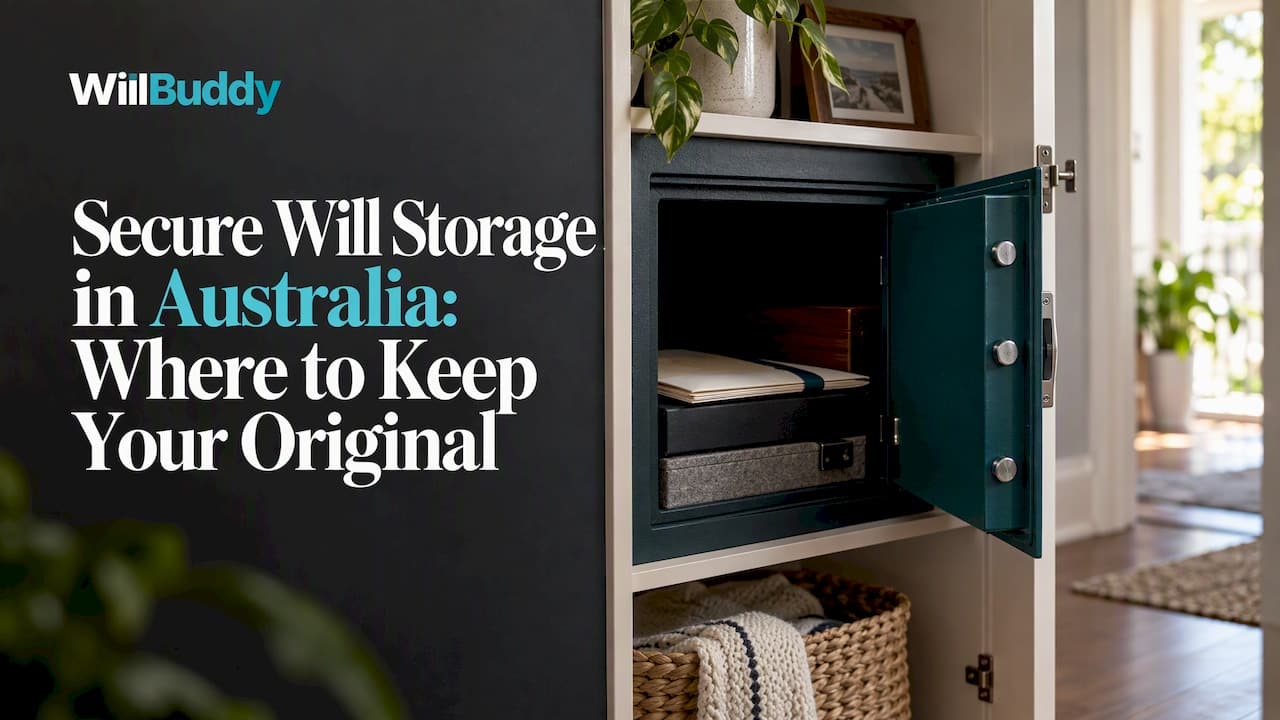
Keep your signed original will somewhere safe from fire, flood, theft and damp. Then tell your executor exactly where it is. Good options include a fireproof safe at home, a solicitor, a public trustee, or a bank. Each has trade-offs. Which ones are open to you depends on your state or territory.
This guide covers each option, what it costs where the government says so, and how to make sure the right person can get the will when it matters. It is general information only, not legal advice.
TL;DR
- Store the signed original in a safe, dry, secure place. A copy is not a substitute, because a probate application needs the original will.
- Tell your executor where the will is. A perfectly stored will that nobody can find causes real trouble.
- Public trustees offer storage in most places, and some are free. Rules and fees differ by state and territory.
- Keep a copy, with a note of where the original sits, in a separate spot.
- Review where your will is kept whenever you move house, change lawyers or update the will.
Why storage matters as much as the will itself
A will only works if someone can produce it. Your executor is the person who has to find it. The NSW State Library says the executor is responsible for finding the will, and that a probate application requires the original.
If the original is lost, the problems stack up. NSW Trustee and Guardian warns that a will kept at home can be stolen, lost or damaged. It also says that a will nobody can locate can lead to extra estate costs and assets not going where you intended.
For parents, the stakes are higher. Your will is where you name guardians for your children. You want that document to turn up quickly and in one piece.
Your storage options compared
No single place is best for everyone. Here is how the main options stack up, based on what Australian government bodies say.
| Option | Main benefit | Main drawback |
|---|---|---|
| Fireproof safe at home | Free and always at hand | Exposed to theft, loss and damage; executor must know the safe and how to open it |
| Solicitor or law firm | Professional safe custody | Usually only holds wills it prepared |
| Public trustee | Government-run, built for this | Fees, eligibility and rules differ by state |
| Bank safe deposit | Secure premises, ID needed | May charge a fee; access can be tricky after death |
| Insurance company | Sometimes offered | May charge a fee |
The South Australian Law Handbook sums up the commercial side. Banks and insurance companies may hold wills for a fee. Trustee companies commonly hold a will only if they are named as executor. Lawyers commonly hold wills they prepared.
Storing your will at home
Home is the easiest option and the riskiest one. Moneysmart lists a fireproof safe at home as one acceptable place, alongside a solicitor, the Courts or the Public Trustee.
If you go this way, do it properly:
- Use a fire-rated, lockable safe or box, not a kitchen drawer.
- Keep it dry and off the floor, away from flood and leak risk.
- Make sure your executor knows where the safe is and can get into it. A safe with a lost key or forgotten code is a locked door.
- Do not staple, clip or write on the document. Keep it flat in a plain folder.
The drawback is that you are the only security. A burglary, a fire or a house move can end the will's life.
Storing your will with a lawyer
Many law firms keep original wills in a vault or safe custody facility. This suits people who had the firm draft the will, because the firm already knows the document. The South Australian Law Handbook notes that lawyers commonly hold wills they prepared.
Things to ask before you hand it over:
- Is there a fee now, or when the will is released?
- What happens if the firm closes, merges or moves?
- How will your executor prove who they are and collect it?
If a firm has closed or the lawyer has died, Legal Aid NSW says the Law Society of NSW may help identify the successor firm or where the files are held. Other states have their own law societies that can be asked.
Storing your will with a public trustee
Every state and territory has a public trustee or similar body. Several run will storage for the public. This is often the most practical independent option, and sometimes it costs nothing. The details differ a lot, so see the state-by-state section below.
Storing your will at a bank
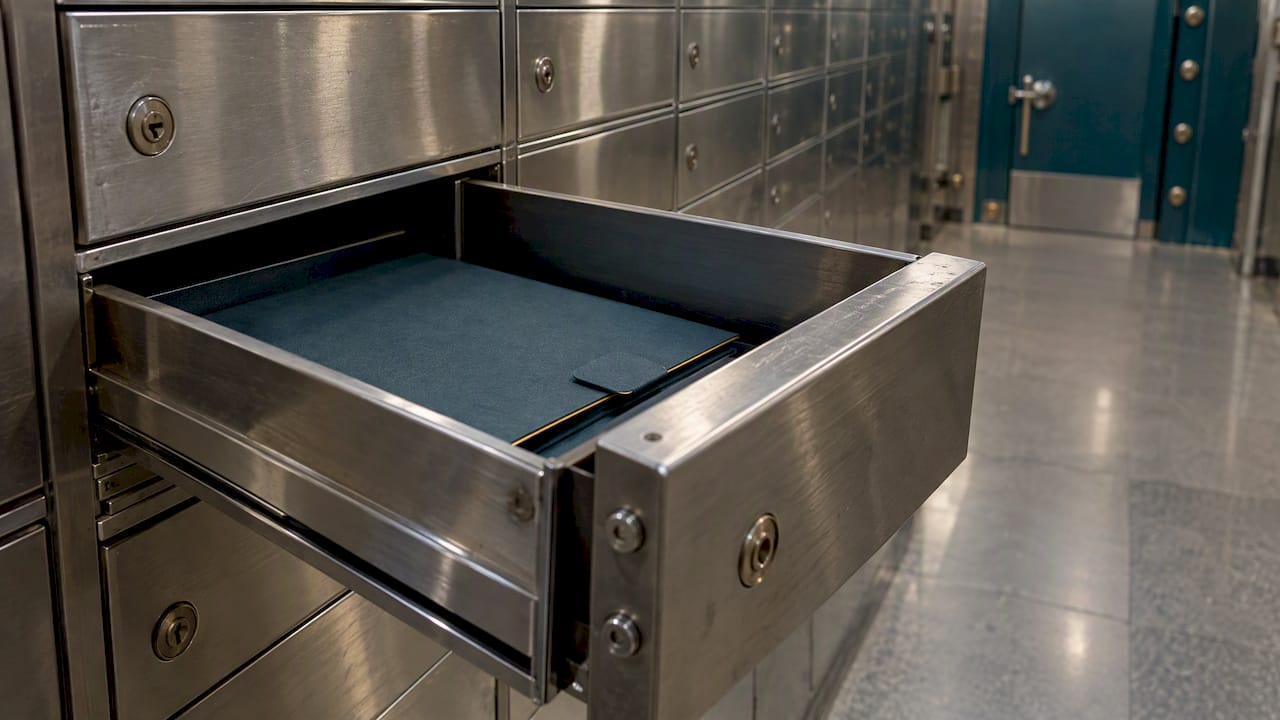
A safe deposit box at a bank needs identification to open. It is secure, but think about access after your death. Your executor may need to prove their authority before the bank will release the contents. The South Australian Law Handbook says banks may charge a fee for holding a will. Ask your bank how its process works for a deceased customer before you rely on it.
Storage rules by state and territory
Wills law is state and territory law, and so are storage services. Here is what the official sources say for several jurisdictions. Fees and services can change, so check the linked page for the current position.
New South Wales
NSW Trustee and Guardian runs WillSafe. It is available to NSW residents. The NSW government says people outside NSW should contact their local public trustee, while existing depositors can keep using WillSafe.
To deposit a will you need the original signed and witnessed document, a copy, identification and a deposit form. WillSafe makes electronic copies. While you are alive, access is limited to you or a person you authorise. After death, the executor and certain other entitled people can inspect or get a copy.
Legal Aid NSW also makes a useful point. A will does not have to be registered. What matters is that the original is stored safely and your executor knows where it is.
Victoria
State Trustees runs the Victorian Will and Powers of Attorney Registry. It says the service is free for all Victorians. You can send your original to its secure storage, or keep the original yourself and register where it is, to help make sure your executor finds it. State Trustees says the registry is trusted by over 80,000 people across the state.
Queensland
The Queensland Public Trustee says that after its will-making process, the original can be held in its storage facility while you keep a copy. It also states that its will-making service and secure storage of the original are free for Queenslanders, whether or not you appoint it as your executor. Check its fees page for the current conditions.
Northern Territory
The NT Government says a will may be stored free at the Public Trustee office in a specially maintained vault. A bank or solicitor may store it for a fee.
Tasmania
The Tasmanian Public Trustee says its safe-custody service is free when the will or other planning document was prepared through the Public Trustee. You, your executor, attorney, guardian, beneficiaries or other authorised people can request access after identity checks.
One practical detail: requested documents are delivered to the closest branch for collection, and delivery may take up to a week. Your executor should not expect the will the same day.
Australian Capital Territory
The ACT Public Trustee and Guardian keeps a central Will Register. Anyone can deposit a will. Fees apply, but deposit is free when the Public Trustee and Guardian is appointed sole or substitute executor. Otherwise its website lists a one-off fee of $228 per will, and later fees may apply for searches, certified copies and withdrawal. Fees are reviewed each financial year, so check the page for the current amount.
South Australia and Western Australia
The South Australian Law Handbook gives the general picture covered above: a secure location, plus a photocopy noting where the original is kept, and telling your executor. Western Australia's Government says an executor's duties include locating and securing the last will. Formal administration may also require a Supreme Court grant of probate. For current storage options in either state, contact the state's public trustee or your own solicitor.
Where does a digital copy fit in?
A digital copy is handy. It lets you read your will, share its location, and update it. But it is not the original. Your executor will generally need the signed paper original to apply for probate.
That is why the safest set-up has three parts:
- The signed, witnessed original in a secure place.
- A copy kept somewhere else, with a note saying where the original is.
- One trusted person, ideally your executor, who knows both locations.
The South Australian Law Handbook recommends exactly this: a photocopy noting where the original is stored.
With WillBuddy, you answer plain questions one at a time and we draft a will for your state or territory. You can read every word for free before you pay. Then you print it and sign it with witnesses. We encrypt your data, never sell it, and keep your will stored securely in Australia while your plan is active, so you can get back to it, edit it and print it again. The paper you sign is the one to protect. Our guide to how to make a will without a lawyer walks through signing and witnessing step by step. See Annual Access pricing for what a subscription includes.
Make sure your executor can find it
Storage is only half the job. Think of it as a handover.
Tell your executor in plain terms
Give them three things: where the original is, who holds it, and how they get it. For a trustee, that means the branch and your full name. For a safe, it means the location and how to open it. NSW Trustee and Guardian says that after your death, the executor can contact it and bring a copy of the death certificate and original identification to retrieve the will.
Not sure who to pick? Read our guide on how to choose a will executor, including why their state can matter.
Keep the location current
Update the note when anything changes. Moves, new banks, a lawyer retiring, and new versions of your will all count. If you replace your will, make sure the new one says it revokes earlier wills, collect the old original, and tell your executor which will is current, so two versions never compete.
No central register
Australia has no single national will registry. Some states run their own, such as Victoria's and the ACT's, but none covers the whole country. Our guide, no central will registry in Australia, covers four ways to keep yours findable.
How a will gets found when nobody knows where it is
It happens. A family member dies and no one knows where the will is. Legal Aid NSW sets out where to look in NSW, in this order:
- The deceased's home and personal papers.
- Their lawyer, or local lawyers.
- Local banks that hold documents in safe custody.
- Their accountant or financial adviser.
- NSW Trustee and Guardian.
- The Supreme Court of NSW.
The full list is on the searching for the will page. Other states follow a similar pattern, so the same places are a sensible start anywhere.
In Victoria, the Public Record Office says probate records can be searched by the deceased's name. For some recent records, the digital probate record includes a copy of the will. That helps with older estates, not with a will that has not yet gone to probate.
All of this takes time, effort and sometimes money. It is far easier to leave a clear note. For the steps that follow once the will is found, see our guide to the probate process in Australia and the wider after-death process.
Common storage mistakes to avoid
- Telling no one. The most common failure. Your executor cannot act on a will they cannot find.
- Hiding it too well. A will tucked into a book or buried in a shed may never surface.
- Keeping it only in a digital file. An unsigned file is a draft. The signed original is what counts.
- Marking up the document. Staples, stickers and handwritten changes after signing can raise questions. If you want a change, make a new will or follow the proper process for your state.
- Forgetting about it after a move. Update your note and your executor.
- Putting funeral wishes only in the will. Your will may not be read until after the funeral. Tell your family your wishes directly as well. Our guide to funeral wishes in an Australian will explains more.
When to talk to a lawyer
Storage is simple for most people. Get legal advice if you have a blended family, a business or trust, assets overseas, or a likely contest. These situations can affect how your will is drafted, signed and held, and a mistake can be costly. A lawyer can also tell you the rules in your state or territory.
If you want to check that your will is signed properly, our article on online wills in Australia looks at how signing can fail.
A simple storage plan you can finish today
- Sign your will with witnesses, following your state's rules.
- Choose one home for the original: a fireproof safe, your solicitor, or your state or territory public trustee if it offers storage.
- Make a copy and write on a separate note where the original is kept.
- Tell your executor, and a backup person if you can.
- Set a yearly reminder to check the plan still holds.
That takes under an hour. It can save your family months of searching.
Start your will with WillBuddy
If you have not made a will yet, start with the will itself. WillBuddy asks plain questions one at a time and drafts a will for your state or territory. You can name guardians for your children, choose executors and set out gifts. You can read the whole thing free before paying. See how WillBuddy works.
FAQ
Do I have to register my will?
No. Legal Aid NSW says a will does not have to be registered. What matters is that the original is stored safely and your executor knows where it is. Some states and territories offer optional registries or deposit services.
Is it safe to keep my will at home?
It can be, if it is in a fireproof, locked safe that your executor can open. But NSW Trustee and Guardian warns that home storage exposes a will to theft, loss or damage. If that worries you, consider a solicitor or a public trustee.
Can I just keep a copy of my will?
A copy is useful as a guide to where the original is, but it does not replace the original. A probate application needs the original will. Keep the copy somewhere separate and note the original's location on it.
How does my executor get my will after I die?
It depends on where it is held. For NSW WillSafe, the executor contacts NSW Trustee and Guardian with a death certificate and original identification. Tasmania's Public Trustee says delivery to a branch can take up to a week. Your executor should know in advance who holds the will and how to ask.
What if I cannot find a will for someone who has died?
Start with their home and papers, then ask their lawyer, banks, accountant and the public trustee. In NSW, the Supreme Court is also on Legal Aid NSW's list. A lawyer can help if the search stalls.
Sources
Show the 15 sources
- Wills and powers of attorney, Moneysmart
- Making a will, Legal Aid NSW
- Searching for the will, Legal Aid NSW
- Where should a will be kept? South Australian Law Handbook
- NSW Trustee and Guardian WillSafe, NSW Government
- Procedure on death if there is a will, State Library of NSW
- The Victorian Will and Powers of Attorney Registry, State Trustees
- Wills and probates, Public Record Office Victoria
- Our Wills service, Queensland Public Trustee
- Wills and powers of attorney fees and charges, Queensland Public Trustee
- Make a will, NT Government
- Public Trustees' safe custody service, Public Trustee Tasmania
- Wills factsheet, ACT Public Trustee and Guardian
- Making a Will, ACT Public Trustee and Guardian
- Manage a deceased estate, Western Australian Government
Start your will free at willbuddy.com.au and read it before you pay.
Recommended
For the one who gets things sorted
Now write yours, with your family's names in it
Plain questions about your family, one at a time, and WillBuddy drafts a will for your state. Until you sign one, the law in your state or territory decides who gets what. Read every word free, with no card. You pay only if you want to print it.
Start my will freeLast updated 25 October 2026.
This article is general information only and is not legal advice. It is our best interpretation of the law as at 25 October 2026. WillBuddy is not a law firm, and it never replaces advice from a lawyer or solicitor. Laws change and differ between states and territories, so for your own circumstances, please get legal advice.