Online Wills in Australia: Re Curtis Shows How Signing Can Fail
General information, not legal advice.
On this page
- What makes a will legally valid: the formalities you must meet
- Remote witnessing and execution: what courts have said and procedural traps to avoid
- Privacy and security checklist for online will services
- Common drafting and execution mistakes that make online wills vulnerable (and how to avoid them)
- When to get legal help instead of using an online will
- How online wills can be made safer: checklist for execution, witnesses and platform checks
- Technological safeguards used by online will platforms to prevent unauthorised access
- How online wills comply with varying state and territory laws
- Why regularly updating your online will matters
- Online wills versus traditional wills: security and legal acceptance
- How online will platforms handle storage and retrieval after death
- How WillBuddy helps you prepare your will and keep it up to date
- FAQ
- Sources
- Recommended
Quick answer
Yes, an online will can be safe, but only if three things line up: the will is signed and witnessed exactly as your state's law requires, the wording is clear enough to avoid arguments, and the service protects your personal data properly. Most failures come from sloppy signing, vague drafting or weak security, not from the fact that the will was made online. If your situation is complicated, speak to a lawyer first.
In short
- Check your state or territory’s rules, then sign the final version while two independent adults watch; both witnesses must sign while you are present.
- Remote witnessing is permitted only in some jurisdictions, and a camera that misses the signature, a frozen link, or wrong order can break the rules and leave your family needing a court application.
- Get legal advice if you have a blended family, business, trust, overseas assets, likely dispute, capacity concerns, or pressure from someone about your wishes.
- Before choosing a service, check encryption, multifactor authentication, backups, breach procedures, data location, and whether your executor can retrieve a copy after your death.
- Keep the signed original somewhere secure, tell your executor where it is, and treat the platform’s digital copy as backup rather than a replacement.
What makes a will legally valid: the formalities you must meet
The law cares far more about how a will is signed than where it was written. A will drafted on paper, on a laptop or through an app is judged by the same basic tests. Victoria Legal Aid explains that a valid will must be in writing and signed in front of two or more witnesses, who also sign it, either with you present or remotely under a strict audio-visual procedure. It is also wise not to ask a beneficiary to witness: in some states a gift to a witness can fail, though in Victoria it is not void (Wills Act 1997 (Vic) s11).
Think of the signing as the moment the document becomes legally real. Before that, it is only a draft. Skip a step and you may have a well-written document that a court will not treat as your will.
Some points to keep in mind:
- You sign, or direct someone to sign for you, with both witnesses watching.
- Both witnesses then sign in your presence.
- Witnesses should be adults with no stake in your estate.
- The document you sign must be the final version, not an earlier draft.
Wills law differs between states and territories. Details such as who can witness, how electronic signing is treated and what happens to gifts to a witness are set by each jurisdiction's own legislation. If you live in New South Wales, Queensland, Western Australia or anywhere else, check the rule for your state rather than assuming Victorian guidance applies. Our guide to will requirements in Australia walks through the state differences.
Victoria (Wills Act 1997 (Vic) s8A) and New South Wales (Electronic Transactions Act 2000 (NSW) Part 2B) have procedures for witnessing a will by audio-visual link. Elsewhere, sign in person. Where these procedures exist, they demand precise procedures, and we cover those traps in the next section. The safest default for most people is still a simple in-person signing with two independent adult witnesses.
Courts can sometimes rescue a document that missed the formalities, using a dispensing power that lets them accept an informal document as a will if they are satisfied the person intended it to be their will (in Victoria, Wills Act 1997 (Vic) s9). Treat that as a safety net, not a plan. Relying on it usually means an application to the Supreme Court, legal costs, delays and stress for the family at a very hard time. Getting the signing right on the day is quicker and cheaper by a wide margin.
Remote witnessing and execution: what courts have said and procedural traps to avoid
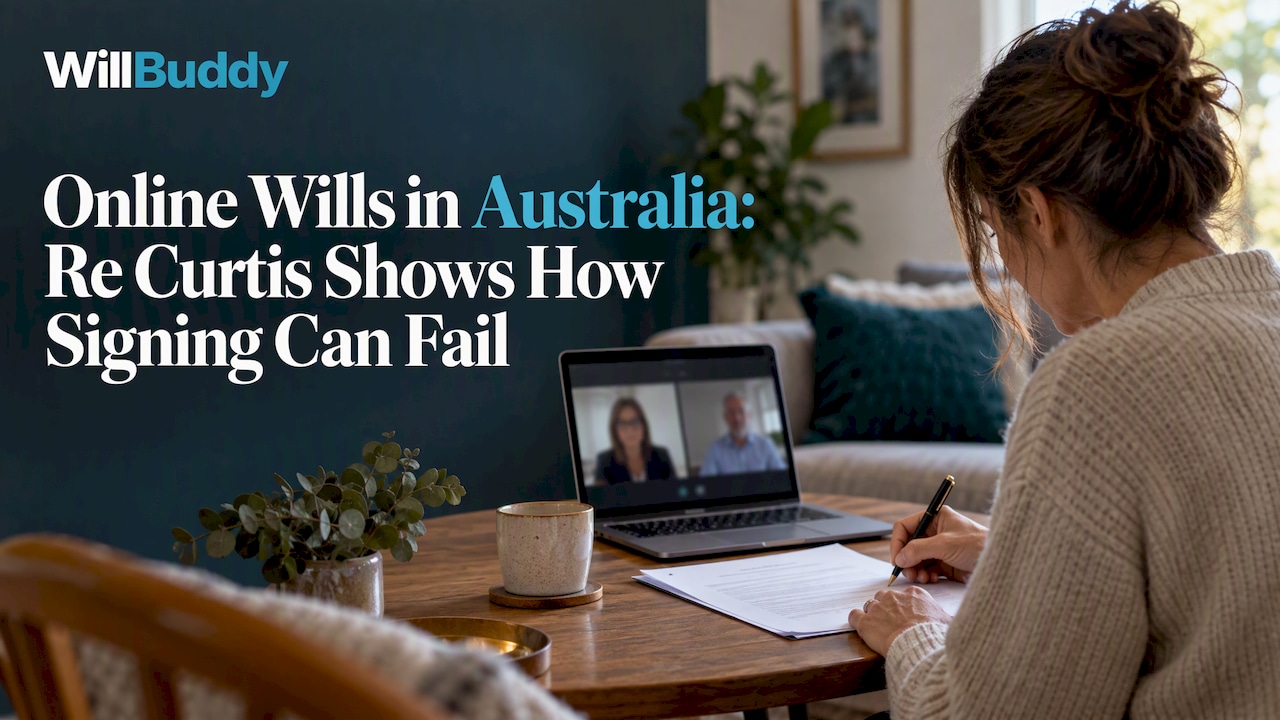
Remote witnessing is where an online will can easily go wrong. A clear illustration is Re Curtis [2022] VSC 621, a Victorian case discussed in this College of Law commentary. The will was signed over a video call, but the witnesses could not actually see the will-maker signing on screen, so the remote procedure was not met. The Supreme Court still accepted the will using its power to admit an informal will, but only after a court application. The case gives practical guidance: everyone must be able to clearly see the hand making the signature and the signature appearing on the document.
The Victorian Government's guidance on electronic signing and online witnessing explains the rules for wills. In Victoria, one witness must be a special witness, such as a lawyer or a Justice of the Peace, the witnesses must clearly see you sign, and the whole procedure must be completed on the same day and in Victoria (Wills Act 1997 (Vic) s8A). Even when a digital will looks right, these steps must be followed exactly.
Typical technical failures include:
- A camera angle that shows your face but not the pen touching the page.
- Video lag or freezing at the exact moment of signing.
- The wrong document being sent to a witness, or a different version signed.
- A witness who cannot see the signature clearly, or who joins late.
- Signing out of the required order.
Each of these can look trivial in the moment. In a later dispute, each can become an argument that the will was never validly made.
If you ever use remote witnessing, these steps reduce the risk:
- Use two devices or cameras, one on your face and one on the page and pen.
- Test the connection and the lighting before you start.
- Confirm out loud that everyone is looking at the same final document.
- Have each witness write a short, dated statement describing what they saw.
- Keep any recording where it is lawful to do so.
For most readers, the simplest way to avoid every one of these traps is to skip remote witnessing altogether and sign in the same room as two independent witnesses.
Privacy and security checklist for online will services
A will contains some of the most sensitive information you own: your family, your assets, your wishes. You are right to ask how an online service protects it.
Australian law sets a baseline. Under the Privacy Act 1988, Australian Privacy Principle 11 requires organisations covered by the Act to take reasonable steps to protect personal information from misuse, interference, loss and unauthorised access. The OAIC's guide to securing personal information explains what that means in practice. The regulator also publishes material on data breaches and the Privacy Act, including the Notifiable Data Breaches scheme.
Most online services run on cloud infrastructure, which brings a shared responsibility. The Australian Cyber Security Centre explains that cloud providers secure the underlying infrastructure, while customers keep responsibility for access control, configuration and some backups. For you as a user, that means your own password habits matter too.
The OAIC's guidance on preparing for and responding to cyber incidents lists the habits of a well-run organisation: a data breach response plan, knowing what personal information it holds, backups, access controls, audit logs and multifactor authentication.
Use this checklist when you assess any service:
- Encryption of your data while it travels and while it is stored.
- Multifactor authentication available on your account.
- Regular backups, protected from tampering.
- A clear breach response plan and a commitment to notify you if something goes wrong.
- Hosting in Australia, or a clear explanation of where your data lives.
- A privacy policy that says plainly whether your data is sold. Ours says so: your will and the personal details in it are stored encrypted, and we never sell your data.
- Contract terms with the cloud providers the service depends on.
Pro Tip: Ask for specifics. Where are backups stored, can you see access logs, and how often is the system tested for weaknesses? A provider with real answers will give them quickly.
Common drafting and execution mistakes that make online wills vulnerable (and how to avoid them)
The most common risk with online or kit-based wills is not hackers. It is people not knowing the rules. Researchers Kelly Purser and Tina Cockburn, in their QUT paper on will formalities, identify users' lack of knowledge about strict execution formalities and legal drafting as the main risk, which can leave an otherwise well-meant document invalid or uncertain. UNSW's overview of DIY wills makes a related point: simple estates can suit DIY wills, but ambiguity invites challenges, and complex assets or blended families raise the need for professional oversight.
Drafting mistakes to watch for:
- Vague wording such as "my jewellery to the kids" when you mean specific items for specific people.
- Beneficiaries described by nickname rather than full name and relationship.
- Blank spaces on a page where someone could later add words. Draw a line through unused space.
- Legal terms used loosely, so a gift means something different from what you intended.
Execution mistakes include using a beneficiary as a witness, using a witness who lacks capacity, and signing in the wrong order. Our page on who can witness a will covers these in detail.
There is also a behavioural risk. A will made without a lawyer involved can be more open to a claim that someone pressured the will-maker, especially when that person is older or vulnerable. Warning signs include pressure to change a will or being kept from independent advice. Independent witnesses help, and so does keeping good records. We explain more in our article on undue influence evidence.
Follow these steps in order:
- Check the signing rules for your state or territory.
- Choose two adult witnesses who receive nothing under your will.
- Sign in front of both witnesses, then have each witness sign in front of you.
- Keep a short note of the date, place and who was present.
- Store the signed original safely and keep a secure digital copy.
When to get legal help instead of using an online will
An online will suits many straightforward situations. Some situations need a lawyer, and it is worth knowing which before you start. Our plain advice: see a lawyer if any of these apply to you.
- You are in a blended or step-family and want to balance partner and children.
- You own a business, or you want to set up a trust.
- You hold assets overseas.
- You expect a family member may challenge the will.
- You are worried about your own or someone else's mental capacity.
- Someone is pressuring you about what to put in your will.
The trade-off is simple. Advice up front costs money, but a dispute over an unclear or contested will can mean court proceedings that cost the estate far more and drag on for a long time. A lawyer can also draft protections that a standard questionnaire cannot.
A quick test: if you answered yes to any item above, book a consultation. If none apply, you may be comfortable with a well-drafted online will. If you are unsure, asking a lawyer one short question is better than guessing.
How online wills can be made safer: checklist for execution, witnesses and platform checks
You can stack the odds in your favour with a short routine. None of it takes long, and most of it costs nothing.
Before signing:
- Read the whole will slowly, out loud if you can, and fix anything unclear.
- Confirm the will was drafted for your state or territory.
- Decide who your two witnesses will be, and check neither is a beneficiary or the spouse of one.
At signing:
- Sign the final printed version, not a draft.
- Make sure both witnesses watch you sign, then sign themselves while you watch.
- Write the date and keep a simple note of who attended.
After signing:
- Keep the original somewhere safe and tell your executor where it is.
- Keep a secure copy and protect your account with a strong, unique password and multifactor authentication where offered.
When choosing a platform:
- Look for plain answers about encryption, backups and what happens to your data.
- Prefer a service that lets you read the whole will before you pay, so you can judge the quality first.
Technological safeguards used by online will platforms to prevent unauthorised access
Good security is layered. No single feature protects you, but several together make unauthorised access much harder.
The features worth looking for line up with what the OAIC and Cyber.gov.au describe:
- Secure login. Strong password rules and protection against repeated guessing.
- Multifactor authentication. A second step, such as a code sent to your phone, so a stolen password alone is not enough.
- Encryption. Your will and personal details scrambled while stored and while moving between your device and the service.
- Access controls and audit logs. Staff see only what they need, and the system records who accessed what.
- Backups. Regular copies kept separately so a fault or attack does not erase your will.
- A breach response plan. A defined process for finding, containing and reporting problems.
The shared responsibility idea matters here. Even a well-protected platform cannot stop you reusing a weak password or leaving a logged-in device unattended. Treat your will account like online banking: unique password, a secure email address attached to it, and no sharing of login details.
We store your will and the personal details in it encrypted, we never sell your data, and we explain our approach in plain words so you can judge it for yourself.
How online wills comply with varying state and territory laws
Australia has no single national wills law. Each state and territory has its own legislation covering formalities, who can witness, how gifts to witnesses are treated and what courts may do with informal documents. A will that works in one place may need different handling in another.
For a service to be safe, it needs to account for that. In practice that means asking which state or territory you live in and tailoring the document and the signing instructions to that jurisdiction's rules. A one-size-fits-all template is a warning sign.
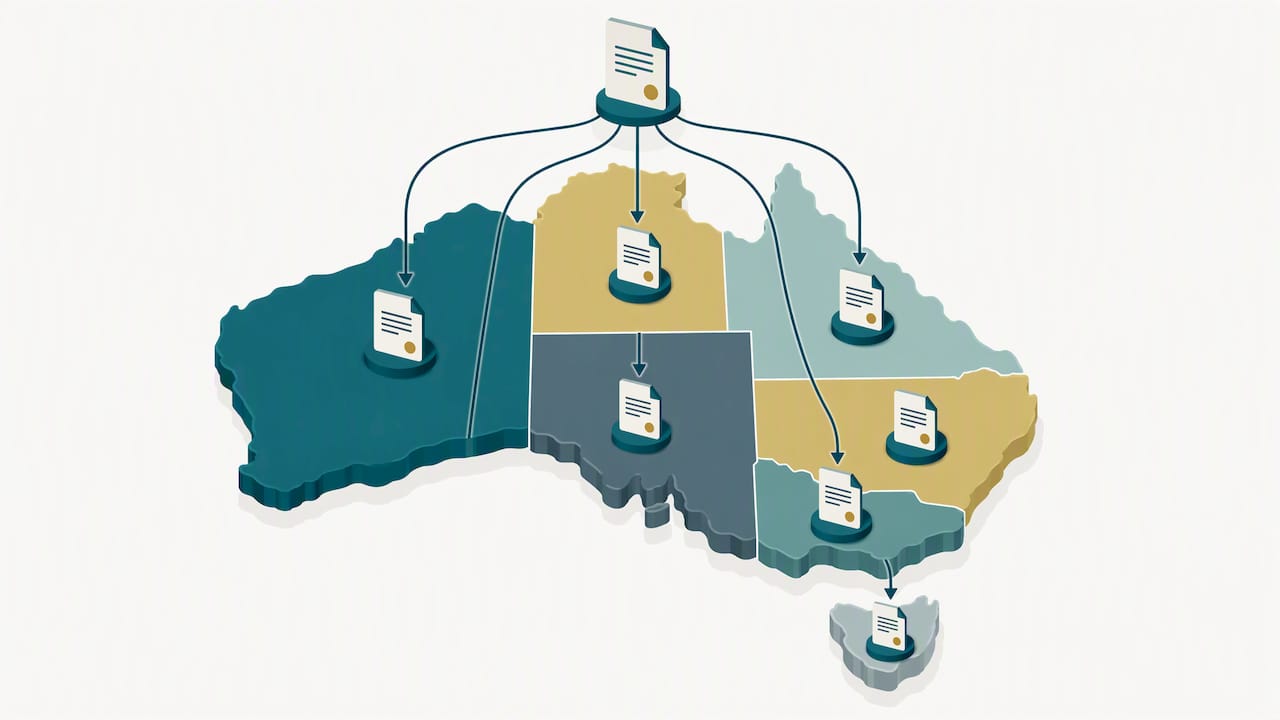
Laws also change. Electronic witnessing provisions, for example, were created or expanded in several jurisdictions in recent years, and the procedures are strict. A reliable service keeps its templates and signing guidance up to date as legislation moves, and tells you what you need to do on signing day.
You can check this yourself. Look for state-specific instructions rather than generic ones, and compare them against your state's guidance. Our overview of making a valid will without a lawyer shows the steps, and each state's own legislation is the final authority. If you move interstate after making your will, review it, as the rules that apply may differ.
Why regularly updating your online will matters
A will is a snapshot of your life on the day you signed it. Life moves on, and an out-of-date will can leave out the people you now care about most.
Review your will after events such as:
- Marriage, separation or divorce.
- The birth or adoption of a child or grandchild.
- The death of a beneficiary, executor or guardian.
- Buying or selling a home or business.
- A significant change in your assets or health.
- Moving to another state or territory.
Updating methods vary. Small changes can be made with a codicil, which must be signed and witnessed with the same care as the will. For bigger changes, many people prefer to make a new will that revokes the old one. Either way, the new document must be properly signed and witnessed, and the old copies should be dealt with so no one finds conflicting versions.
An online service makes this easier because your answers are saved and the document can be regenerated. You can update your will as life changes. Remember that any edit still needs a fresh, correctly witnessed signing before it takes effect.
Online wills versus traditional wills: security and legal acceptance
The law does not treat a will differently because it was created online. What counts is the finished document and how it was signed. A will produced through an online service, printed and signed correctly before two independent witnesses meets the same formal tests as one prepared in a solicitor's office.
Where the two approaches differ is in the safeguards around that moment.
- Signing support. A solicitor usually supervises the signing and can spot problems on the spot. With an online will, you carry that responsibility, so following the instructions closely matters.
- Advice. A lawyer can tailor a will to complex family or business circumstances. A questionnaire-based service suits straightforward situations best.
- Data security. Both hold sensitive information. An online service stores it digitally, so encryption, access controls and breach planning matter. A law firm has its own obligations to protect client files.
- Cost and speed. Online tools are usually faster and lower in cost, which can help more people finish a will at all.
Research on will-making in Australia, in a QUT-led study of will making and contestation, found that most Australians who have wills used private solicitors, while a small proportion used online kits or DIY approaches, and practitioners noted widespread misunderstanding of formalities and contestation risks. The takeaway is not that one route is unsafe by nature, but that the signing and drafting steps decide the outcome.
How online will platforms handle storage and retrieval after death
A will only works if the right people can find it when needed. That makes storage and retrieval part of safety, not an afterthought.
The original signed document is what counts in most cases, so the first rule is to keep the signed original somewhere secure and make sure your executor knows where. Common choices include a home safe, a safe deposit arrangement or with your solicitor. A digital copy held by a platform is a useful backup, but it does not replace the signed original.
Ask any service these questions before you rely on it:
- Where is my data stored, and is it backed up?
- How will my executor access a copy if I die, and what proof will they need?
- What happens to my stored will if I cancel or the service closes?
- Can I download and print my will at any time?
Online storage should be encrypted, with access limited to you. Because your executor may need to prove who they are before retrieving anything, ask how that verification works. Tell your executor and a trusted family member where the original is kept and how to reach any digital copy, so the document is not lost when it matters most.
How WillBuddy helps you prepare your will and keep it up to date
We built WillBuddy around the checklist above. We ask you plain questions one at a time and draft a will for your state or territory. You can read every word for free before you pay, so you judge the quality first.

Here is how that maps to the risks in this article:
- State-specific drafting: your will is prepared for your state's rules.
- Print and sign with witnesses: print and sign your will with two independent witnesses.
- Secure storage: your will and the personal details in it are stored encrypted, and your data is never sold.
- Easy updates: edit your will when life changes.
If you have a blended family, a business or trust, overseas assets or a likely contest, see a lawyer first. For the rest of us, you can see our plan on the pricing page. Start your will free at willbuddy.com.au and read it before you pay.
This article is general information, not a substitute for advice from a qualified lawyer. Consult a qualified legal professional about your own circumstances before acting on anything here.
FAQ
Are online wills legally valid in Australia?
Yes, an online will can be valid if it meets your state's formalities. It must be in writing and signed in front of two or more witnesses, as Victoria Legal Aid explains. How you create the document matters less than how you sign it.
Can I witness my online will over video?
Some jurisdictions allow it under strict procedures, but it is risky. The Re Curtis case shows a remote witnessing can fail if witnesses cannot clearly see you sign, as this commentary describes. Signing in person with two independent witnesses is the safer choice.
How do I know an online will service keeps my data secure?
Look for encryption, multifactor authentication, regular backups and a clear breach response plan. The OAIC guidance on securing personal information says organisations must take reasonable steps to protect your data. Ask where backups are stored and how the service handles breaches.
When should I see a lawyer instead of using an online will?
See a lawyer if you have a blended family, a business or trust, assets overseas, or expect someone to challenge your will. Concerns about mental capacity or pressure from others are also good reasons. Complex situations are where professional advice pays for itself.
Sources
Show the 4 sources
Recommended
For the one who checks before they pay
See your whole will before you spend a cent
Put off by the cost? Until you have a will, the law in your state or territory decides who gets what. WillBuddy drafts yours for your state from plain questions about your family. Read every word free, with no card. You pay only if you want to print it. A solicitor gives personal legal advice; WillBuddy doesn't.
Start my will freeLast updated 17 October 2026.
This article is general information only and is not legal advice. It is our best interpretation of the law as at 17 October 2026. WillBuddy is not a law firm, and it never replaces advice from a lawyer or solicitor. Laws change and differ between states and territories, so for your own circumstances, please get legal advice.